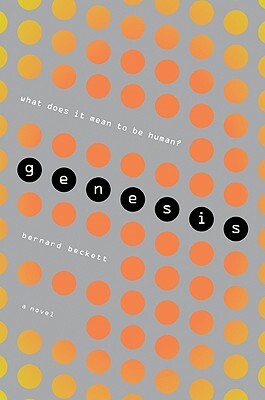
Spoiler-free
It's been almost three weeks since I finished this book, and every time since then that I sat to write down something about it (which admittedly wasn't quite often), I would stare at the blank page, and feel unequipped to do the book justice yet. I didn't have the right words for it yet. Tomorrow I'll try again, I told myself, more times than I can count, was it procrastination? I am not sure. But here we are, I have finally managed to try to put my thoughts and feelings about this book into words (I want to say on paper but as you can see....)
Let me start by trying to describe the book first, without giving away anything that might potentially hinder the reader experiencing the book in it's entirety. The book starts with Anax (Anaximander) going into 'The Academy' to take part in an oral examination (I had pre-exam jitters!!) on a topic of her choice, to enter the said Academy. The Academy is said to be one of the most prestigious institutes in the Republic. Some people may bristle at how much the world is borrowed from Philosophical works, specifically Plato's Republic, but I was, am quite ignorant here, probably having lived under a rock most of my thinking life, and hence haven't read or heard much about Plato's Republic, a shortcoming on my part really, but it in no way hindered my understanding or enjoyment of the book, at least I think so, but then again to quote the book itself
You think you're the end of it, but that's what thinking is best at: deceiving the thinker.
As the examination progresses, so does Anax's understanding of herself, of the Subject she had chosen to study, and most of all why she had chosen the subject at all. We get to take the journey with her, and a subtle theme I found weaved throughout the book was, 'Pay attention to what you pay attention to.' There were of course more overt themes examined i.e. what it means to be human, is pure thought something we should strive for, would a world populated by beings of pure thought and no emotions or empathy be rational as one would expect it to, and what it means to be human in the age of AI. Another quote from the book that stands out in this regard is:
Are you saying a society wracked by plague is preferable to one wracked by indifference?
Give this a read, if you want to follow a more introspective journey, of the Anax trying to understand herself , of trying to understand why she sees the world the way she does and much more. I also feel compelled to mention this was quite a short book, as books go, but in no way was it lacking on ideas, or lingering thoughts. As Adam said when trying to explain what made him human:
"I am not a machine. For what can a machine know of the smell of wet grass in the morning, or the sound of a crying baby? I am the feeling of the warm sun against my skin; I am the sensation of a cool wave breaking over me. I am the places I have never seen, yet imagine when my eyes are closed. I am the taste of another's breath, the color of her hair. "You mock me for the shortness of my life span, but it is this very fear of dying that breathes life into me. I am the thinker who thinks of thought. I am curiosity, I am reason, I am love and I am hatred. I am indifference. I am the son of a father, who in turn was a father's son. I am the reason my mother laughed and the reason my mother cried. I am wonder and I am wondrous. Yes, the world may push your buttons as it passes through your circuitry. But the world does not pass through me. It lingers. I am in it and it is in me. I am the means by which the universe has come to know itself. I am the thing no machine can ever make. I am meaning."
This book lingers. And that's the highest compliment I can give the author.
Introduction
Lately, I found myself tuning more and more out from the happenings in the world. The wars, the constant criticism of everything possible in reach, so much division and discrimination over every conceivable difference, and AI fears, many valid and some exaggerated in my opinion. Of course the algorithms, that dictate much of what we consume, what narrative of the current happenings we get, (check out: TheirTube ) and hence play a huge part in how the current society is shaping up to be, but we are not without blame . And Ignorance is not the solution.
Or in this case, Ignorance would be the ammunition we shoot ourselves in the foot with. But in no way was I ready to go back to the sources that caused such bone deep exhaustion, ignited this fierce urge to go live in the middle of a forest (knowing full well I probably wouldn't have survived more than a day or two, I am not Bear Grylls), so I turned to reading books once again. No notifications, no comments, just me and an author, able to sit down for hours at end and revolve around a few select topics. It used to be an escape from the world growing up, because life was so suffocating and oppressive more times than not, with no way out. It was scary how the current state felt so similar to being stuck in a similar suffocating prison as the one I grew up in. I started reading purely as an escape once again. I read fantasy, lots of it and didn't read much deeper into it than the magic, the adventurous plot, even though there was so much more to explore in the beautiful worlds I read about.
Once I was reading semi-regularly again, it felt hard, dishonest even, to remain completely ignorant of the world around me. So I went back to slowly informing myself with the current affairs of the world. It was (and is still) overwhelming more times than not. I couldn't go onto news channels, or newspapers, or social media without being overwhelmed again. What was I to do in such a situation, where both continuing and stopping felt like a betrayal of my sanity?
I had long since noticed I read more or less exclusively in one genre, not that there is anything wrong with it, after all Fantasy had been my crutch through some of the most trying times in my life, it taught me to get up and continue again every time I fell.
The most important step a man can take. It's not the first one, is it?
It's the next one. Always the next step, Dalinar.
- Brandon Sanderson, Oathbringer
So I looked for the smallest, easiest next step I could take without sacrificing what little calm I had managed to claw back. And the answer was staring me right in the face the whole time, varying the things I read, venturing out of my beloved genre where I had made my home.
Part 1: AI
I stumbled upon many a great books this way. And one of them was Genesis by Bernard Beckett. One of the few times in my life that I appreciated the various algorithms used by tech companies instead of despising them, because it was Storygraph's algorithm that brought the book to my notice. It really goes to show that it's not technology that's inherently evil, but how we humans implement and use it, quite similar to how Nuclear Fission brought us the possibility of clean nuclear energy and the atomic bomb. I am well aware that people's opinions vary widely on the topic of atomic energy, and vary even more widely on the latest technology that is entering our lives widely i.e. Artificial Intelligence. LLMs.
And that's what makes the book so fascinatingly relevant to current times, Adam is imprisoned in a room, with the only possible company he'd be getting for the foreseeable future being a sentient AI Art. Now I call it sentient, because in the book this is the thought behind said AI:
"We cannot program a machine to think," was the
slogan of the pioneering firm Artfink, in which William learned his trade,
"but we can program a machine to be programmed by thinking."
- Bernard Beckett, Genesis
And this is how Philosopher William writes of his own creation, Art:
Although I have created Art, I do not understand it. This is the right and proper result of my research process. Art's development has provided me with daily surprises, but lately I have noted the rate of surprise diminishing. That Art's behavior has settled into a predictable pattern is not in itself alarming, it is after all what we would wish for any growing child. But my concern is the plateau has been reached too quickly. Perhaps I write this with the bias of a too-proud parent, but I am sure my invention is capable of achieving much more. The problem, as I see it, is that I who wrote the program am also charged with shaping its development. If Art no longer surprises me, it is in part surely because I no longer surprise Art. It is crucial he be exposed to an outside influence before his trimming and redirecting mechanisms shut down, and he becomes like a child deprived of stimulation, his curiosity left to wither. Sadly, after the nursery incident, finding a sufficiently agile volunteer for this process will be no easy matter.
- Bernard Beckett, Genesis
The 'Artfink project' suffered many setbacks and was pulled away from public eyes after it harmed several nursery children where it had been deployed to learn from them and alongside them, which ended in a disaster with several kids....am I just imagining the parallels? (See: AI Chatbots and Teen Suicides )
“Ginny!" said Mr. Weasley, flabbergasted. "Haven't I taught you anything? What have I always told you? Never trust anything that can think for itself if you can't see where it keeps its brain?”
- J.K. Rowling, Harry Potter and the Chamber of Secrets
And where are the LLM's we are using widely in our everyday lives? In the large corporations' data centres. Poor Arthur would be losing his mind despite his absolute love for every muggle thing. Not that you shouldn't use LLM's at all, they are tools, like any other, and we are tool makers and users. But just as we wouldn't put personally identifying information on the internet, or tell them to a complete stranger, then why are we giving them to companies and corporations that have incentives to exploit them? Why are we outsourcing our thinking (This one gives me chills alongside AI girl- or boyfriends.)? Suddenly the Butlerian Jihad from Dune by Frank Herbert doesn't feel like fiction but a possibility, however faint for now.
Some reading/documentary regarding this:
(Read Article : Tips on using LLMs for help with your tasks )
(See documentary : AI 'Partners' )
(Read Article : ChatGPT and lobbying )
This is not a recommendation per se, since I haven't read it, but something that's been on my radar for a while: (Book : Empire of AI by Karen Hao )
Part 2: Learning/Reading
Another big theme in increasingly totalitarian regimes is controlling the flow of information and learning (like the Book Burning in Nazi Germany ) :
Books have been censored by authoritarian dictatorships to silence dissent, such as the People's Republic of China, Nazi Germany and the Soviet Union. Books are most often censored for age appropriateness, offensive language, sexual content, amongst other reasons. Similarly, religions may issue lists of banned books, such as the historical example of the Catholic Church's Index Librorum Prohibitorum and bans of such books as Salman Rushdie's The Satanic Verses by Ayatollah Khomeini which do not always carry legal force. Censorship can be enacted at the national or subnational level as well, and can carry legal penalties. In many cases, the authors of these books could face harsh sentences, exile from the country, or even execution.
- Wikipedia
Controlling who we may talk to, may love, may have children with ( Nazi Eugenics). This doesn't just provide grounds for discrimination, robs the discriminated of ability to defend themselves or even recognize systemic discrimination against them because of a lack of information but also consolidates the power in the hands of a few with no one to question them. As seen in the Philosopher's class in the Book. They were supposed to be 'the best of the best', but can they really make policies, and laws for the people when they haven't even experienced or seen what life is like for the Labourers, the Soldiers, the Technicians? Isn't that evident in how the Philosopher's passed a law where they and they only were exempt from being separated from their children?
"it is the government who is the beneficiary of human rights which are to be asserted against the individual"
- Wikipedia, Soviet Union
In the book, Adam was was born into the Philosopher class, but "He had shown himself to be combative, impulsive, unafraid of censure, and drawn toward female company." and when he smuggled himself into a friend's commune with her help, he was 'demoted' to a soldier (worse fate awaited him but his punishment had been lessened on behalf of his teacher's plea). There he showed signs of not simply accepting what was said, of questioning the authority, of prioritizing humanity and human connection. Well murky waters really because he killed his sentry partner Joseph, was he justified in the killing? Can killing ever be justified? He had only two alternatives: either kill the girl who had braved the oceans or to be killed if he hesitated in shooting her. He asked Joseph to help him learn how to do it, given it was his first time on the watchtowers, being ordered to kill someone in cold blood because they sought what we may presume was safety or a better life. He ended up killing Joseph instead, and hid the girl in a cave near the walls of the Republic.
The Republic sought to deny the individual, and in doing so they ignored a simple truth. The only thing binding individuals together is ideas. Ideas mutate, and spread; they change their hosts as much as their hosts change them.
- Bernard Beckett, Genesis
Adam was then tried for this heinous crime of letting a stranger from the 'Plague infested lands'. Though there had been no evidence, or information from the outside world for years. The fear and terror, that the Republic used to keep people in it's grip was fading, the general Populace was growing more curious about the 'Outside', they were also starting to turn their attention to the Republic itself. They were starting to question the Republic, the Philosopher's. And the Philosophers, scrambling desperately to maintain their power, organized a very public trial for Adam. A big mistake on their part, because Adam with all his charm, disarming smile and complete acceptance of acting out of empathy, and doing what he felt was right. That "the greater good can only be found by looking inside." (Something about all of this seems quite reminiscent of: - Luigi Mangione) The tide turned against the Republic, the general public made a hero out of Adam. Punishing him severely now would have only increased the already rising opinions against the Republic. Can one not argue it was Adam's capability to form his thoughts into well thought out and charming and convincing speech that saved his life from immediate death? A capability learned from his training as a philosopher, from reading, from engaging in stimulating conversations with his peers.
Conclusion or the character of Anaximander
Anaximander, the actual protagonist of the book, whose eyes we saw the past through seems to struggle with the same as (if I was to extrapolate) many of us. I am quite conflicted on how to interpret/understand her. Is she a metaphor for an AI developing emotions & empathy which is of course not favourably looked at by the Academy, or a metaphor for how our own empathy are being sucked out of us?
Are you saying a society wracked by plague is preferable to one wracked by indifference?
- Bernard Beckett, Genesis
I'd argue indifference, apathy is a kind of plague. Unrecognized. What are humans without empathy? Or to remain within the realms of the novel, why was the Academy running a program to eliminate any members of the AI Society that developed anything resembling emotions or empathy for Adam? Because they'd harder to govern or harder to control ? Isn't the Academy perpetuating the Republic of Plato? Withholding information and strictly policing the ways of thinking of it's citizens?
The Academy insists:
So long as we do not know the evil we are capable of there is a chance we will never embrace it.
- Bernard Beckett, Genesis
Yet (from our history) it was known to the scientists what kind of devastation the atomic bomb would cause, when they were making it. People were well aware in theory and did it anyways. It was seeing the devastation first hand that made masses move against the use of nuclear weapons. (There is an amazing poem on the devastation wrecked by the Bomb in Vikram Seth's book: All you who sleep tonight. The Poem was: A Doctor's Journal Entry for August 6, 1945. Since the book is a bit hard to find (there is a kindle edition available on Amazon, but given Kindle's policies....) I found an explanation of the poem for high school children, that has the full poem in excerpts: A Doctor's Journal Entry for August 6 1945 (Explanation)_VIKRAM_SETH.pdf )
I think we need to be aware of our own capabilities, to know the extent of damage we can cause, in order to not cause it (and without a practical demonstration of these limits!). Scientific thinking is the only way forward, but science without empathy leads to devastation too. I leave you with two quotes, that in my opinion help understand the world around us better, after all that was what the book, that was what the essay and that is what reading is about, isn't it?
Doubt is the origin of wisdom.
― Rene Descartes, Meditations on First Philosophy
„Die beste Morgengymnastik fuer einen Forscher ist es, jeden Tag vor dem Fruehstueck eine Lieblingshypothese ueber Bord zu werfen“
- Konrad Lorenz, Verhaltensforscher, 1903 - 1989
(Translation: The best morning sport for a (researcher) scientist is to disprove a beloved hypothesis before breakfast.)