
Mother Mary Comes To Me
Arundhati Roy
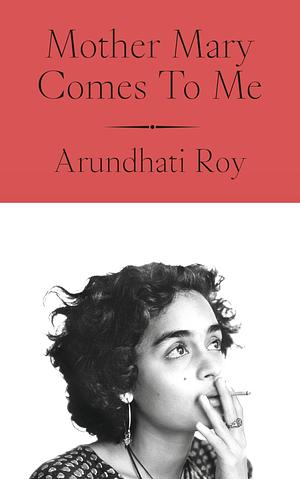
Arundhati Roy said it was hard to write this book, and it was equally hard not to write it. Just as she felt compelled to write the book, I felt compelled to read it. I first heard of the book in one of her interviews. I was mesmerized by her language, the beauty and hope that seemed to flow with her sentences. A sentiment I carry with me after having read the book too, though it was far from a joyful ride. But I came out of the book with a new appreciation of Arundhati Roy and her outlook on life:
I have seen and written about such sorrow, such systemic deprivation, such unmitigated wickedness, such diverse iterations of hell, that I can only count myself among the most fortunate. I have thought of my own life as a footnote to things that really matter. Never tragic, often hilarious.
- Arundhati Roy, Mother Mary Comes To Me
As I said above, I felt compelled to read the book, after watching an interview of Arundhati Roy, with Salman Rushdie, after winning the Booker Prize for 'The God of Small Things'. How could I not? A book about Arundhati and Mary Roy, two unapologetically opinionated, in a time and place where being a woman was disadvantageous (it still is to some extent). I wanted to, needed to know the source of this courage. To be outspoken, when women who spoke up for themselves, or on matters effecting them, were labelled as immoral and subjected to ridicule, and often physical violence. 'लड़की हाथ से निकल गई' (Translation: The girl slipped out of our/my grip. Usually meant in a derogatory fashion.), is common phrase used in such cases. As if a woman is an unruly, rabid animal that has slipped the leash or escaped a cage, the audacity of the woman, right?
Arundhati Roy heard a different iteration of the phrase too, 'The girl's gone bad'. In her book she recounted when it was used against her and the contempt she felt. Contempt, an emotion I think many women in India (and many other places, say Afghanistan right now, under the Taliban Rule) are deeply, intimately familiar with. Saddening.
I should not have been surprised, when after flying through the book, the answer that I found was, that the courage stemmed from a need to be true and just to oneself, from a lack of apprehension about offending others in the process.
That is not to say the women of India don't want or strive to be true and just to themselves. But there are religious and patriarchal systems in place, that start indoctrinating women from childhood. It is the women's silence that plays a huge role in holding these systems up (See : Women in India). Many are unable to break out of these chains, from a lack of education (mostly in rural areas), from fear of social ostracization, from fear of violence, or abandonment. But the fight never stopped. What better example of this than the Author and her mother Mary Roy:
The women of Mary Roy's Syrian Christian community could not inherit property because of the Travancore Christian Succession Act of 1916. As laid out in this act, Syrian Christian women could inherit property but would only be paid the lesser of one quarter of a son's inheritance or 5,000 rupees as what was referred to as sthreedhanam (transl. dowry).
- Wikipedia page for Mary Roy
Mary Roy certainly won the case in 1986, had founded and was running co-educational school in that time, movements for societal good, but her behaviour to her children was vastly different as evident in the book. Her behaviour to her children went largely uncommented on by the people around them but they surely had things to say about the co-ed school (which she had to convince many worried parents 'was not a den of vice and sexual profligacy') or about her fighting and winning the case to change the Inheritance laws of the Syrian Christian community:
The one I remember most clearly is when an older Syrian Christian woman, I think she was a doctor, or the wife of a doctor said, 'Why are you trying to destroy our beautiful community? What will we do with all these rights you want us to have?'
- Arundhati Roy, Mother Mary Comes To Me
The book isn't just a chronicle of Arundhati Roy's relationship with her mother, or her life, but of the India of those times, of the various movements towards Women's equality, towards making education accessible to all, towards protecting indigenous tribes. And major political happenings of the time too like Indira Gandhi declaring emergency, the riots after Indira Gandhi was assassinated, the riots in 2002 in Gujrat etc. It wasn't just the subject matter that drew me in, but the way it was presented as well, the language, the beauty of it. She gave me words for my own experiences of growing up in the Indian Society, words to argue against the directives of how to be a woman, what to do with my life, what to wear, what to eat, how to sit, how to laugh, how to exist. The book gave me a much needed nudge to start my own journey to not let language be a barrier in fighting for myself, in understanding myself.
If I understood myself better, I'd understand a lot more about the world and certainly about my country, in which so many people seem to revere their prosecutors and appear grateful to be subjugated and told what to do, what to wear, what to eat, how to think. There is something knotty here, something puzzling about the human condition in all of this.
- Arundhati Roy, Mother Mary Comes To Me
The book sits very close to my heart, possibly because I grew up in India, and saw many of the problems she talked about up close. Seen and lived the narrow path Society sets women and ostracizes, ridicules, punishes anyone for daring to question it or heavens forbid stray from it. But it's not just women, or people of Indian descent that have something to take away from this book, I think everyone has something to gain from this beautifully written memoir of this courageous and seditious( as she calls herself) person. I would recommend the book to anyone, who wants to find a way to keep going, keep standing for what they believe is right, in an increasingly polarized and confusing world.
References and Further reading: